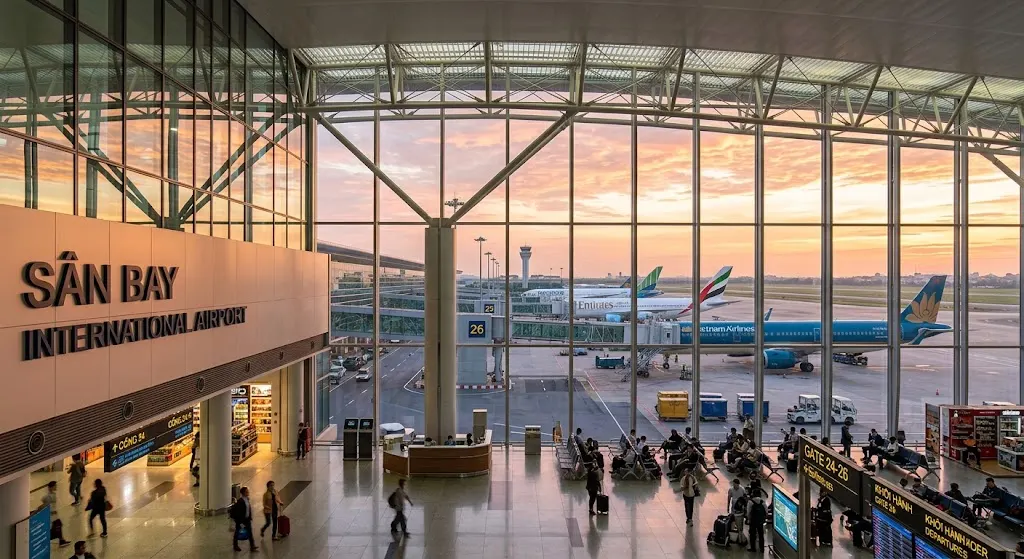
Sân Bay International Airport: What It Really Means and Why It Matters for Global Travelers in 2026
Direct Answer: An international airport is a designated airport of entry and departure for international air traffic, where customs, immigration, and quarantine procedures are carried out.
Look, the definition of an international airport sounds boring when you read it in a regulatory textbook. The ICAO — that’s the International Civil Aviation Organization — says it’s simply “any airport designated by the Contracting State as an airport of entry and departure for international air traffic”.
But here’s the translation that matters for Vietnamese speakers. Sân bay means “airport.” Quốc tế means “international.” Put them together, and you get Sân Bay Quốc Tế — the Vietnamese phrase for what English speakers call an international airport.
So when you see a sign in Ho Chi Minh City that says “Cảng hàng không quốc tế Tân Sơn Nhất,” you’re looking at the formal Vietnamese name for Tan Son Nhat International Airport.
The practical difference between a domestic airport and an international flight airport comes down to three things:
- Customs and immigration — you need them to cross borders legally
- Quarantine services — health, animal, and plant checks that protect countries from pests and diseases
- Bilateral agreements — governments have to agree that flights between them can land at specific airports
Without those, you’re just moving people around inside one country. Important, sure. But not international.
Key Takeaway: Sân Bay Quốc Tế Meaning
- Sân bay = airport. Quốc tế = international. Together: international airport.
- The international airport meaning hinges on customs, immigration, and quarantine facilities.
- Vietnam’s aviation authority classifies airports based on runway length, lighting systems, and bilateral agreements.
Bottom line: A Sân Bay International Airport isn’t just a bigger domestic airport — it’s a legally designated border crossing with wings.
Major International Airports: The Giants That Move the World
Direct Answer: The world’s busiest airport in 2025 was Hartsfield-Jackson Atlanta International with 106.3 million passengers, followed by Dubai, Tokyo Haneda, Dallas/Fort Worth, and Shanghai Pudong.
Here’s where things get wild. I’ve been in airports that felt like small cities. Atlanta? It’s basically its own municipality. The airport has held the title of world’s busiest international airport for 27 of the last 28 years. The only exception was 2020, when a certain global pandemic reminded us that even aviation giants can be humbled.
The largest international airports by land area tell a different story. King Fahd International in Saudi Arabia sprawls across 300 square miles — roughly the size of Bahrain. Denver comes in at 135 square kilometers. Kuala Lumpur International covers over 100 square kilometers and remains the biggest in Southeast Asia.
But size isn’t everything. Changi Airport in Singapore occupies just 12 square kilometers and still gets crowned the world’s best airport year after year. That’s the difference between “big” and “great.”
When travelers search for major international airports or the world’s international airports, they’re usually looking for hubs that connect continents. The top five busiest in 2025 were:
| Rank | Airport | 2025 Passengers |
| 1 | Atlanta (ATL) | 106.3 million |
| 2 | Dubai (DXB) | 95.2 million |
| 3 | Tokyo Haneda (HND) | 91.7 million |
| 4 | Dallas/Fort Worth (DFW) | 85.7 million |
| 5 | Shanghai Pudong (PVG) | 85.0 million |
Source: Airports Council International, 2026 dataset
Key Takeaway: Busiest International Airports
- Atlanta dominates passenger traffic, but Dubai leads in international passenger volume.
- The largest international airports by area are in Saudi Arabia and the U.S.
- Asia-Pacific hubs like Tokyo Haneda and Shanghai Pudong are climbing fast.
Bottom line: The busiest international airports aren’t always the biggest — but they’re always the best connected.
| Tour Package | Duration & Route | Departure Period | Reference Rate (per adult) | Key Inclusions |
|---|---|---|---|---|
| Phú Quốc Paradise Escape | 3 Days / 2 Nights Ho Chi Minh City (Tan Son Nhat) → Phu Quoc |
Sep 12 – Dec 19, 2026 (Scheduled departures) |
From 8,239,000 VND | Vietnam Airlines flights, Hon Thom cable car, Sun World Aquatopia, VinWonders, Vinpearl Safari, Grand World |
| Mercure Danang Skybound Package | Stay + Cable Car Danang / Ba Na Hills |
Sep 1 – Nov 30, 2026 | From 4,500,000 VND (per room / 2 adults) |
Accommodation, daily buffet breakfast, Signature Buffet Dinner or 1,000,000 VND F&B credit, round-trip Ba Na Hills cable car tickets |
| Japan New Year Charter Osaka – Kyoto – Kobe |
5 Days / 4 Nights Ho Chi Minh City (Tan Son Nhat) → Kansai |
Dec 29, 2026 – Jan 2, 2027 | 26,990,000 VND | Vietjet Air charter flights, 4-star hotels, Sagano Bamboo Forest, Fushimi Inari, Kiyomizu Dera, Nara Park, Kobe beef experience |
| Vietnam Highlights Tour | 12 Days Hanoi → Ho Chi Minh City |
Aug 29 – Dec 12, 2026 | From $5,273 USD | Halong Bay cruise, Hoi An walking tour, Cu Chi Tunnels, domestic flights (Hanoi–Danang, Hue–HCMC), 11 breakfasts, 5 dinners |
| Treasures of Vietnam | 8 Days Ho Chi Minh City → Hanoi |
Sep 2026 – Dec 2029 | From $1,890 USD | Cu Chi Tunnels, Hoi An garden-to-table experience, Halong Bay overnight cruise, domestic flight, 7 breakfasts, 2 lunches, 2 dinners |
International Airport Near Me: How to Find Your Nearest Gateway
Direct Answer: Finding an international airport near me requires checking whether your closest airport handles cross-border flights — many regional airports only serve domestic routes.
I learned this the hard way. I once booked a flight to “Paris” and ended up at Beauvais — 85 kilometers from the city. Not international in the way I needed. The airport had international flights, technically. But the experience was domestic-bus-terminal-meets-cow-pasture.
Here’s how to find your true international airport near me:
Step 1: Check the airport code. International airports typically have three-letter IATA codes that show up in global booking systems. Tan Son Nhat is SGN. Noi Bai is HAN. If your airport code doesn’t appear in international search results, it’s domestic only.
Step 2: Look for “quốc tế” or “international” in the name. In Vietnam, the distinction is explicit. Cảng hàng không quốc tế Tân Sơn Nhất. Cảng hàng không quốc tế Nội Bài. The phrase sân bay quốc tế isn’t decorative — it’s a legal designation.
Step 3: Verify customs and immigration services. If you can’t clear customs there, you can’t fly internationally from there. Simple as that.
Vietnam’s airport network is expanding aggressively. The revised National Airport System Plan aims for 15 international airports by 2030 — including Noi Bai, Tan Son Nhat, Da Nang, Cam Ranh, and the massive new Long Thanh project outside Ho Chi Minh City.
For travelers in Vietnam, the international airport near me question usually has a clear answer. In the north, it’s Noi Bai. In the south, Tan Son Nhat. In the center, Da Nang. But the map is changing fast.
Key Takeaway: Finding Your Nearest International Gateway
- Not every airport with “international” in its name offers the full range of global services.
- Vietnam’s sân bay quốc tế network is expanding to 15 airports by 2030.
- Always verify customs and immigration before booking a cross-border flight.
Bottom line: The international airport near me is the one that can actually stamp your passport — not just the one with a fancy name.
International Airport Terminals: Where Chaos Meets Order
Direct Answer: International airport terminals are the buildings where passengers check in, clear security, and board flights — but international terminals add customs and immigration to the process.
Terminals are where the magic and the misery happen. I’ve sprinted through Tan Son Nhat’s international terminal with a connection that was already boarding. I’ve waited three hours in Atlanta’s Terminal F because a thunderstorm grounded everything. Terminals are the heartbeat of any Sân Bay International Airport.
The international airport terminals experience differs from domestic in one crucial way: you’re crossing a border. That means:
- Immigration — passport control, visa checks, entry stamps
- Customs — declaring goods, paying duties if required
- Quarantine — health screenings, sometimes animal/plant inspections
Vietnam’s Tan Son Nhat International Airport has separate domestic and international terminals — a common setup worldwide. The international terminal handles the international airport departures and international airport arrivals for flights to and from countries like Japan, South Korea, Singapore, and the U.S.
Modern terminals are designed to move people efficiently, but the best ones add a touch of humanity. Changi has a butterfly garden. Incheon has a cultural center. Tan Son Nhat has… well, it has character. And pho.
Key Takeaway: Navigating International Terminals
- International airport terminals add customs and immigration to the standard airport flow.
- Tan Son Nhat and Noi Bai separate domestic and international operations.
- Allow extra time for international airport departures — border formalities take longer.
Bottom line: International airport terminals aren’t just bigger — they’re where your trip officially leaves one country and enters another.
International Airport Flights: Departures, Arrivals, and the Art of Not Missing Your Plane
Direct Answer: International airport flights involve cross-border travel requiring passports, visas, and compliance with both departure and arrival country regulations.
Let’s talk about the two moments that define every international trip: international airport departures and international airport arrivals. Get the first one wrong, and you’re not going anywhere. Get the second one wrong, and you’re explaining yourself to a border officer.
For departures:
- Arrive at least 2-3 hours early for international flights
- Have your passport, visa, and any required health documents ready
- Check in with your airline, then proceed to immigration
- After immigration, you’re in the international zone — you can’t leave without canceling your trip
For arrivals:
- Fill out any required entry forms before landing
- Proceed to immigration with your passport and visa
- Collect your baggage, then clear customs
- Declare anything that needs declaring — honesty is cheaper than fines
The international airport flights ecosystem runs on bilateral agreements between countries. Vietnam, for example, has air service agreements with dozens of nations that determine which airlines can fly which routes and land at which sân bay quốc tế.
The COVID-19 pandemic reminded everyone how fragile this system can be. But by 2025, global air travel hit 9.8 billion passengers — a record, and 6.5% above pre-pandemic levels. Cross-border air travel is back, and it’s bigger than ever.
Key Takeaway: Mastering International Flights
- International airport departures require earlier arrival and document checks.
- International airport arrivals involve immigration, baggage claim, and customs.
- Bilateral agreements govern which airports can handle international flight traffic.
Bottom line: International airport flights are a dance between airlines, governments, and travelers — and the traveler who knows the steps wins.
Vietnamese Airport Terminology: A Quick Glossary for Travelers
Direct Answer: Vietnamese airport vocabulary includes terms like sân bay (airport), quốc tế (international), nội địa (domestic), and cửa khẩu (gateway).
If you’re traveling to or within Vietnam, knowing a few Vietnamese airport vocabulary terms saves you from confusion. The Vietnamese language builds airport terminology logically, and once you see the pattern, it sticks.
| Vietnamese | English | Notes |
| Sân bay | Airport | Literally “yard” + “fly” |
| Sân bay quốc tế | International airport | The key phrase |
| Sân bay nội địa | Domestic airport | Opposite of quốc tế |
| Quốc tế | International | Used broadly |
| Cảng hàng không | Airport (port) | Formal/official term |
| Nhà ga | Terminal | Where you board |
| Chuyến bay | Flight | Any flight |
| Khởi hành | Departure | Leaving |
| Hạ cánh | Arrival/Landing | Arriving |
The sân bay quốc tế translation is straightforward: airport + international. But the cultural context matters. Vietnam’s aviation system is growing rapidly, and the government uses these terms in official planning documents. When the Ministry of Construction releases its airport development plan, it lists sân bay quốc tế by name — 15 of them by 2030.
This airport translation Vietnamese English guide won’t make you fluent, but it will keep you from boarding the wrong bus at Tan Son Nhat.
Key Takeaway: Vietnamese Airport Vocabulary Essentials
- Sân bay quốc tế = international airport. Sân bay nội địa = domestic.
- Quốc tế meaning is simply “international” — it appears in many contexts.
- Official Vietnamese documents use cảng hàng không quốc tế for formal designations .
Bottom line: A little Vietnamese airport terminology goes a long way — especially when the signs switch languages mid-corridor.
FAQs
Question: What does sân bay quốc tế mean in English?
Answer: Sân bay quốc tế translates directly to “international airport” in English. Sân bay means airport, and quốc tế means international. It’s the standard Vietnamese phrase for any airport designated to handle cross-border flights with customs and immigration facilities.
Question: What is the difference between a domestic and international airport?
Answer: Domestic airports handle flights within one country. International airports add customs, immigration, and quarantine services for cross-border travel. They require bilateral agreements between governments and typically have longer runways and more extensive facilities to accommodate larger aircraft and international passenger volumes.
Question: Which is the world’s busiest international airport?
Answer: By total passenger traffic, Hartsfield-Jackson Atlanta International Airport is the world’s busiest, handling over 106 million passengers in 2025. By international passenger volume specifically, Dubai International Airport typically leads. Atlanta has held the overall top spot for 27 of the last 28 years.
Question: How many international airports does Vietnam plan to have by 2030?
Answer: Vietnam aims to operate 15 international airports by 2030 as part of its revised National Airport System Plan. These include Noi Bai, Tan Son Nhat, Da Nang, Cam Ranh, Phu Quoc, and the new Long Thanh International Airport outside Ho Chi Minh City.
Question: What should I know about international airport departures?
Answer: For international departures, arrive 2-3 hours early. Have your passport, visa, and any health documents ready. Complete check-in, clear security, then proceed to immigration and customs. After immigration, you’re in the international zone. Duty-free shopping is available, but you cannot exit without canceling your flight.
Conclusion
Sân Bay International Airport isn’t just a phrase — it’s a gateway. Whether you’re standing in Tan Son Nhat at 5 AM or navigating Atlanta’s endless concourses, the principles are the same. Customs. Immigration. Quarantine. Bilateral agreements. The machinery that turns a runway into a border.
Vietnam’s aviation ambitions are skyrocketing. Fifteen international airports by 2030. Long Thanh rising from the red dirt of Dong Nai. A network that connects the Mekong Delta to the world.
The international airport meaning comes down to one thing: a place where countries meet. Where you hand over a passport and get a stamp. Where your journey leaves one nation and enters another.
Bottom Line: A Sân Bay International Airport is a legally designated border crossing with runways, terminals, and the infrastructure to move people across countries. Vietnam is building more of them. The world is using them more than ever. And travelers who understand the system — the international airport departures, the international airport arrivals, the international airport terminals — move through it with confidence.
Your turn: Which international airport has surprised you the most? Drop a comment. Share this with someone who’s about to take their first cross-border flight. And next time you see sân bay quốc tế on a sign, you’ll know exactly what you’re walking into.
References
- International Civil Aviation Organization (ICAO). “International airport definition.” AIRM.aero.
Read More: Play Airlines Shutdown