The International Student’s Guide to Thriving in Malaysia’s Top Universities
Malaysia has rapidly transformed into a global education hub, attracting over 130,000 international students from over 160 countries. With its unique blend of affordable high-quality education, a multicultural environment, and a relatively low cost of living, it is no surprise that institutions like Universiti Malaya (UM) and Taylor’s University consistently climb the QS World University Rankings.
However, transitioning to the “Jewel of Southeast Asia” involves more than just packing a suitcase; it requires a strategic approach to academic and cultural integration.
For many, the initial “honeymoon phase” of exploring Kuala Lumpur’s skyline or Penang’s street food is quickly met with the reality of rigorous Malaysian academic standards. Malaysian universities follow a hybrid of British and local pedagogical styles, emphasizing independent research and critical analysis.
If you find yourself overwhelmed by the sudden influx of academic papers, seeking professional essay help can be a strategic way to understand the structural expectations of local professors while you find your footing.
The secret to thriving in Malaysia lies in balancing your social integration with academic discipline. While the local “Mamak” culture offers a great way to bond with peers over Teh Tarik, the workload at top-tier institutions is unforgiving.
To maintain your GPA without sacrificing your mental health, many students rely on a professional assignment helper to navigate complex modules.
This allows you to focus on experiential learning—such as internships in the Klang Valley’s booming tech sector—while ensuring your written submissions meet the high linguistic and formatting standards required by Malaysian faculty.
The Malaysian Higher Education Landscape: Data & Trends
According to the Ministry of Higher Education (MOHE), Malaysia aims to host 250,000 international students by 2025.
This growth is driven by the “Transnational Education” (TNE) model, where prestigious UK and Australian universities (like Monash, Heriot-Watt, and Nottingham) have established full-fledged branch campuses in Malaysia.
Why Students Choose Malaysia (Data Points):
- Cost Advantage: Tuition fees are approximately 40-60% lower than in the US or UK.
- Language: English is the primary medium of instruction in private universities and widely spoken in public ones.
- Global Recognition: 5 Malaysian universities are ranked within the top 200 globally (QS 2024).
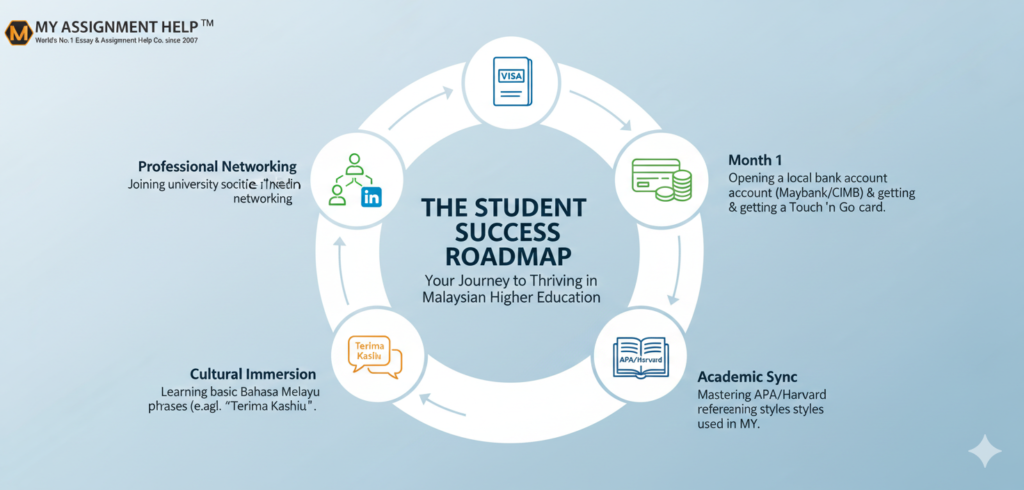
Strategic Tips for Academic Success
1. Master the “EMGS” and Administrative Nuances
The Education Malaysia Global Services (EMGS) manages student visas. Always keep digital copies of your VAL (Visa Approval Letter). Malaysian bureaucracy can be slow; patience is a virtue you will learn quickly.
2. Overcoming the Language Barrier
While English is prevalent, “Manglish” (Malaysian English) is the social currency. Using “lah” at the end of sentences might feel strange at first, but understanding the local vernacular helps in building rapport with local students and faculty.
3. Leveraging Academic Support
Don’t wait until finals week to seek help. Malaysian universities value proactive students. Utilize the library resources at the “Perpustakaan” and engage in study groups. If the technical jargon of a specific subject becomes a barrier, academic consultancy services are a common safety net for the international community.
Cost of Living: A 2024 Snapshot
Source: Numbeo & MOHE Reports
| Expense Category | Monthly Estimate (MYR) | Monthly Estimate (USD) |
| Accommodation (On-campus) | RM 600 – RM 1,200 | $125 – $250 |
| Food & Dining | RM 800 – RM 1,000 | $170 – $210 |
| Transport (LRT/MRT/Grab) | RM 150 – RM 250 | $30 – $55 |
| Miscellaneous | RM 300 | $65 |
Cultural Integration: “Satu Malaysia”
Malaysia is a melting pot of Malay, Chinese, and Indian cultures. Respecting local customs—such as dressing modestly when visiting government buildings or religious sites—goes a long way. Participating in festivals like Hari Raya, Chinese New Year, and Deepavali will be the highlight of your international journey.
Key Takeaways
- Prioritize the Visa: Ensure your attendance stays above 80%, as the EMGS monitors this for visa renewals.
- Budget Wisely: Use student discounts on the RapidKL rail network.
- Seek Support: Use academic tools and “assignment helpers” to bridge the gap between different international education systems.
- Network: Malaysia is a gateway to ASEAN; build connections that last beyond graduation.
FAQ: Frequently Asked Questions
Q1: Can international students work part-time in Malaysia?
Yes, international students are allowed to work part-time for a maximum of 20 hours per week during semester breaks or holidays exceeding 7 days, subject to immigration approval.
Q2: Is health insurance mandatory?
Absolutely. All international students must be covered by a locally recognized medical insurance policy, usually arranged through the university and EMGS.
Q3: Which city is best for international students?
While Kuala Lumpur (KL) is the most popular, Subang Jaya and Cyberjaya are dedicated “education cities” with a high density of international students and modern amenities.
Q4: How do I deal with academic plagiarism rules in Malaysia?
Malaysian universities use Turnitin extensively. Always cite your sources. If you are struggling with citations, professional editors can guide you on maintaining academic integrity.
About the Author: Sarah Low
Senior Academic Consultant at MyAssignmentHelp
Sarah Low is an education enthusiast with over 10 years of experience in the Southeast Asian higher education sector. Having worked closely with international student departments in Kuala Lumpur, she specializes in helping students transition from diverse curricula to the Malaysian academic framework. She is a regular contributor to blogs focusing on student well-being and academic excellence.
References
- Ministry of Higher Education (MOHE) Malaysia – Statistics on International Enrollment 2023.
- QS World University Rankings 2024: Top Universities in Malaysia.
- Education Malaysia Global Services (EMGS) – Guide for International Students.
- Department of Statistics Malaysia (DOSM) – Cost of Living Indices