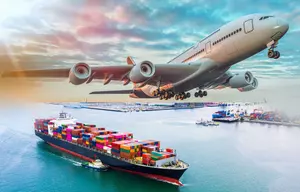
Air Freight vs Courier vs Sea Freight – What’s Best for India to UK Shipping?
When it comes to sending goods or personal parcels from India to the UK, choosing the right shipping method is one of the most important decisions. The route you pick can significantly impact delivery time, cost, and even the condition of your items upon arrival.
Most international senders usually consider three primary options — air freight, courier, and sea freight. Each has its own pros and cons depending on what you’re shipping and how quickly you need it delivered.
In this article, we’ll explore these options in detail to help you decide the best method for your India to UK parcel, whether you’re shipping business goods, personal belongings, or festive gifts.
1. Air Freight – Fast, Reliable, and Ideal for Businesses
Air freight is often the top choice for businesses that need to send large quantities of goods quickly. It’s the fastest mode of transportation between India and the UK, typically taking 3–7 working days depending on the carrier and customs clearance.
Advantages of Air Freight:
- Speed: Perfect for urgent shipments or time-sensitive goods.
- Security: High levels of monitoring and minimal handling reduce damage risks.
- Tracking: Real-time tracking and professional logistics management.
Disadvantages:
- Higher cost: Air freight is usually the most expensive option.
- Weight restrictions: Airlines impose limits on parcel size and weight.
Air freight works best for high-value, time-critical, or perishable items. Partnering with a reliable logistics expert like India to UK Courier can make the air freight process hassle-free. They handle everything from packaging and customs documentation to door-to-door delivery — saving you time and reducing stress.
2. International Courier – The Most Convenient Option
For personal parcels, gifts, and small business shipments, international courier services are often the most convenient and cost-effective. Couriers combine air transport with simplified customs clearance, offering door-to-door delivery with end-to-end tracking.
Advantages of Courier Shipping:
- Door-to-door convenience: No need to coordinate with freight forwarders or port agents.
- Simplified documentation: Couriers handle customs declarations and invoices.
- Affordable for smaller shipments: Great for parcels under 30–40 kg.
Disadvantages:
- Limited for heavy goods: Not suitable for bulk shipments or pallets.
- Volumetric pricing: Charges depend on both weight and box dimensions.
When sending parcels through a UK to India courier or vice versa, you get express delivery with competitive rates. These services are ideal for personal packages, e-commerce orders, or business samples that need to arrive safely and on time.
3. Sea Freight – Cost-Effective for Large Shipments
Sea freight is the traditional and most economical option for large shipments that are not time-sensitive. Cargo ships carry containers between major ports like Mumbai and London, with transit times typically ranging between 30 to 45 days.
Advantages of Sea Freight:
- Cost efficiency: The cheapest method for heavy and bulky goods.
- Bulk capacity: Ideal for large shipments, machinery, or household relocations.
- Eco-friendly: Lower carbon footprint compared to air transport.
Disadvantages:
- Longer transit time: Not suitable for urgent shipments.
- Complex handling: Involves customs at both origin and destination ports.
- Limited tracking: Visibility can be lower than courier or air freight.
Sea freight is ideal for businesses moving goods in bulk, or individuals relocating from India to the UK. However, it’s best managed through a trusted freight forwarding company that can handle customs documentation and insurance.
4. Key Factors to Consider Before Choosing a Shipping Method
To pick the best option for your shipment, consider:
- Delivery urgency: Air freight and courier are best for time-sensitive items.
- Budget: Sea freight is cheapest, courier is mid-range, and air freight is premium.
- Parcel weight and size: Couriers are suitable for small to medium shipments, while sea freight handles large cargo.
- Type of goods: Fragile or high-value items often require air transport for safety.
A balanced approach is often ideal — for instance, use air freight for urgent business deliveries and courier services for personal parcels. Meanwhile, sea freight remains unbeatable for bulk cargo where cost matters more than speed.
5. Customs and Documentation – The Common Ground
Regardless of which method you choose, all international shipments must go through customs. Proper paperwork is essential to avoid delays. Ensure your parcel includes:
- Commercial invoice or gift declaration
- HS code classification
- Accurate sender and receiver information
Working with professionals like India to UK Courier ensures all your customs paperwork is handled correctly, saving you time and avoiding potential fines or shipment returns.
Final Thoughts
Each shipping method — air freight, courier, or sea freight — serves a unique purpose.
- If speed and reliability are your top priorities, go with air freight.
- For personal or business parcels under 30 kg, courier services offer the perfect balance of cost and convenience.
- And if you’re shipping large, non-urgent cargo, sea freight provides the most economical solution.
Ultimately, the best approach depends on your timeline, shipment size, and budget.
For trusted, transparent, and timely delivery, services like India to UK Courier and UK to India Courier offer tailored solutions to ensure your parcels reach safely — no matter which direction or mode you choose.